

By the end of 2025, video content had become one of the most common ways for brands to communicate with their audiences. According to MartechEdge, half of Generation Z and 45 percent of millennials spend their time on platforms built around video.
This also changes expectations toward companies: audiences find it easier to engage with a live format that shows real processes, interaction, and culture. That is why branded videos are now used for many business needs.
However, according to Wyzowl research, the main barrier for marketers is not understanding where to start and how to build the process. That is why in this article we spoke with Yevheniia Moskalchuk, Head of PR and Communications at Universe Group, and Yevhenii Holovatenko, co-founder of the production company adje, about how video affects brand and business metrics, and shared practical advice on how to create a branded video.

How Does Branded Video Affect Brand Perception?
One of the main goals of branded video is to strengthen a company’s image in the eyes of an external audience. And it does this more effectively than most other formats. According to Wyzowl’s annual report, 96 percent of marketers say that video content helps increase brand awareness.
The same research shows that 91 percent of consumers say video quality directly affects their trust in a brand. When a video is made with attention to detail and a message that resonates, it helps create a positive impression even before interacting with the product or company.
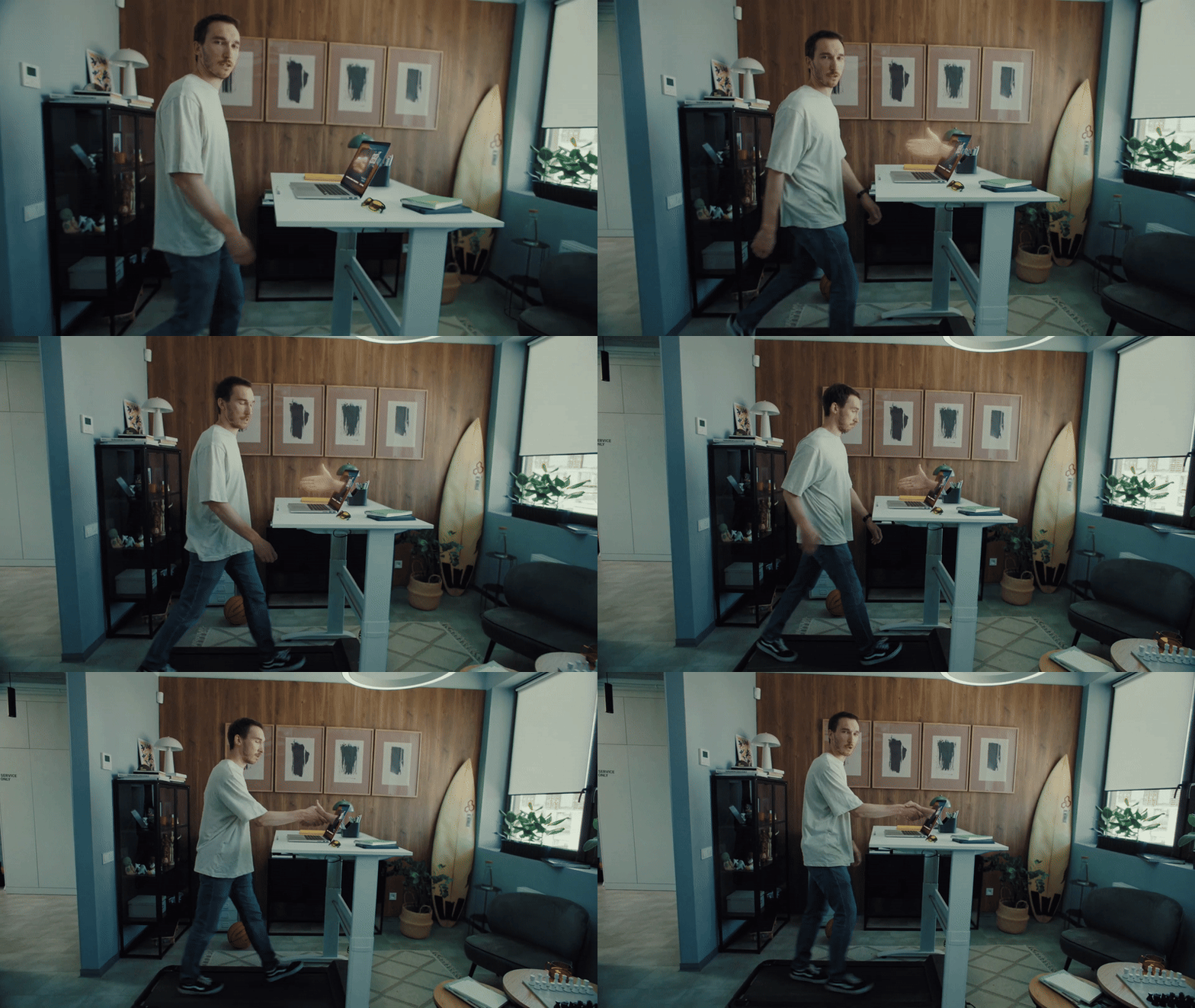
How Does Branded Video Affect Recruitment?
Video content improves recruitment results by attracting more candidates and increasing engagement and hiring conversion. According to LinkedIn, job listings that include video receive 12 percent more views and 34 percent more applications compared to listings without video.
In addition, 59 percent of job seekers find video content more interesting and informative than traditional text job descriptions. As a result, video helps a vacancy stand out, attract the right people, and increase conversion from viewing a job listing to submitting a resume.
How to Create a Branded Video
The process of creating a branded video consists of seven stages. The key task is to focus not on visuals, but on whether the video conveys your atmosphere, culture, and values.
1. Start by Defining Your Goals
The video should support specific business goals: strengthening employer branding, increasing brand awareness, or telling a product story.
2. Choose a Production Company
It is important to evaluate not only the portfolio, but also how well the team understands your culture. Having several conversations with different production companies helps find partners who can accurately convey your company’s style.
3. Script and Pre-production
After selecting the team, the production company starts working on the script. They conduct interviews and look for ideas based on the company’s values and tone of voice. This is how the script is formed. After that, preparation for filming begins.
4. Filming Day
Depending on the goal, filming may take place in the office or other locations. To make the video feel more authentic, involve your team instead of actors.
5. Post-production
It is worth creating not only one main video, but also several additional formats: short cuts, vertical and horizontal versions, and videos with and without captions. This allows the video to be used across different channels.
6. Distribution
After the video is created, it needs to be shown to the audience. Do not limit distribution to YouTube or company social media. Videos can be integrated into job listings, presentations, email newsletters, targeted ads, and internal events. This helps the content work more effectively and reach a wider audience.
Yevhenii Holovatenko, co-founder of the production company adje, says that the most important part of a video is the truth of the story it tells:
“Audiences very quickly feel when a company tries to invent an emotion or image that does not match reality. This is especially noticeable when founders or team leaders appear in the video. When what they say is genuine and lived through, the video works in a completely different way.”
FORMA × adje Case: How the Team Created a Branded Video
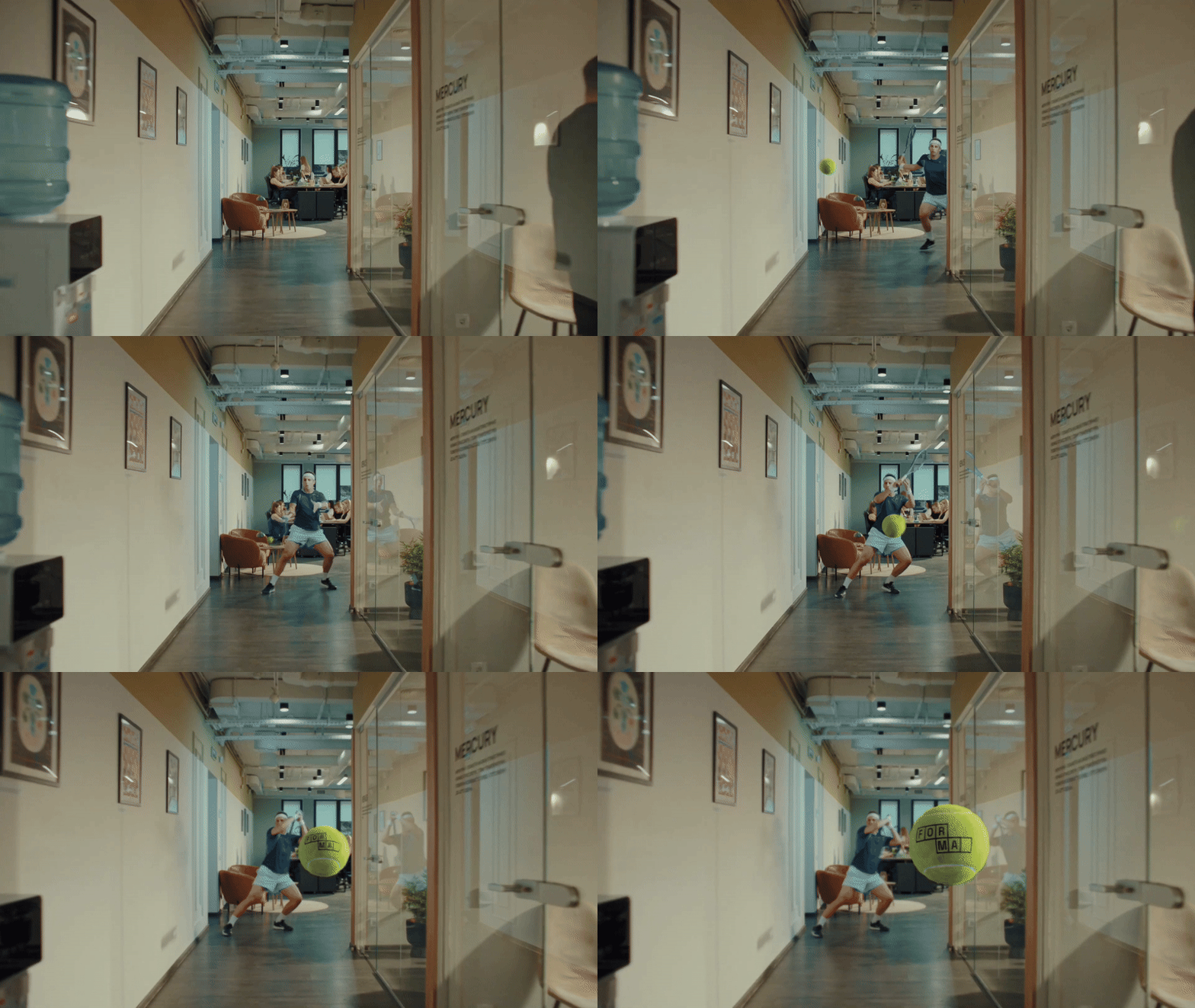
Recently, Universe Group presented a branded video for FORMA, a business that creates document management services and simplifies work for millions of professionals.
“Before starting the project, we spoke with several production teams. The key criterion was not the portfolio, but the team’s ability to understand the business culture. Collaboration with adje came together quickly, and already during the first meetings it became clear that the production team understood the context and could convey the ‘DNA’ we needed to embed in the video,” — says Yevheniia Moskalchuk, Head of PR and Communications at Universe Group.
After filling out the brief, there were several rounds of meetings with the FORMA team. The production team clarified processes, got to know the people, and immersed themselves in the product. This made it possible to create a script that reflected the team’s real work and find a tone that would slightly stand out among other market players.
The filming took one day. The Universe Group team obtained all necessary permits and temporarily closed a small street near the office to adapt the space for filming. The FORMA team took part in the video, and actors were invited only for a few scenes. This approach preserved authenticity and showed the team’s atmosphere without staged elements.
“With FORMA, we did not need to invent a story. We needed to find a form that had not been presented like this on the market before. We simply showed things as they are and chose a tone that truly fits this team and business. That is why the video looks unusual for the IT market, but completely natural for FORMA,” — adds Yevhenii Holovatenko.

Branded videos are becoming a tool that helps companies communicate with their audiences. They convey things that are hard to describe with words — team culture and atmosphere. When the process is well thought out and the production team is deeply immersed in the context, video becomes a working tool that helps attract candidates, increase brand awareness, and form a clearer brand image.